
Evaluation
Symptoms, lifestyle, medical history, orthopedic and neurologic testing, and functional movement patterns.
Graston IASTM Midtown NYC
Instrument assisted soft tissue mobilization for tissue quality, glide, tendon load, and recurring restriction.
Graston IASTM Midtown NYC
Instrument assisted soft tissue mobilization for tissue quality, glide, tendon load, and recurring restriction.
Dr. Ashley Narain evaluates how the spine, joints, fascia, training history, workstation, gait, and daily load are interacting. Treatment is selected for the person in front of her, not for a generic protocol.
The goal is to reduce pain, improve mobility, increase strength of irritated tissues, and restore physical function with a plan that fits real New York schedules.
How Graston / IASTM works at Sinar
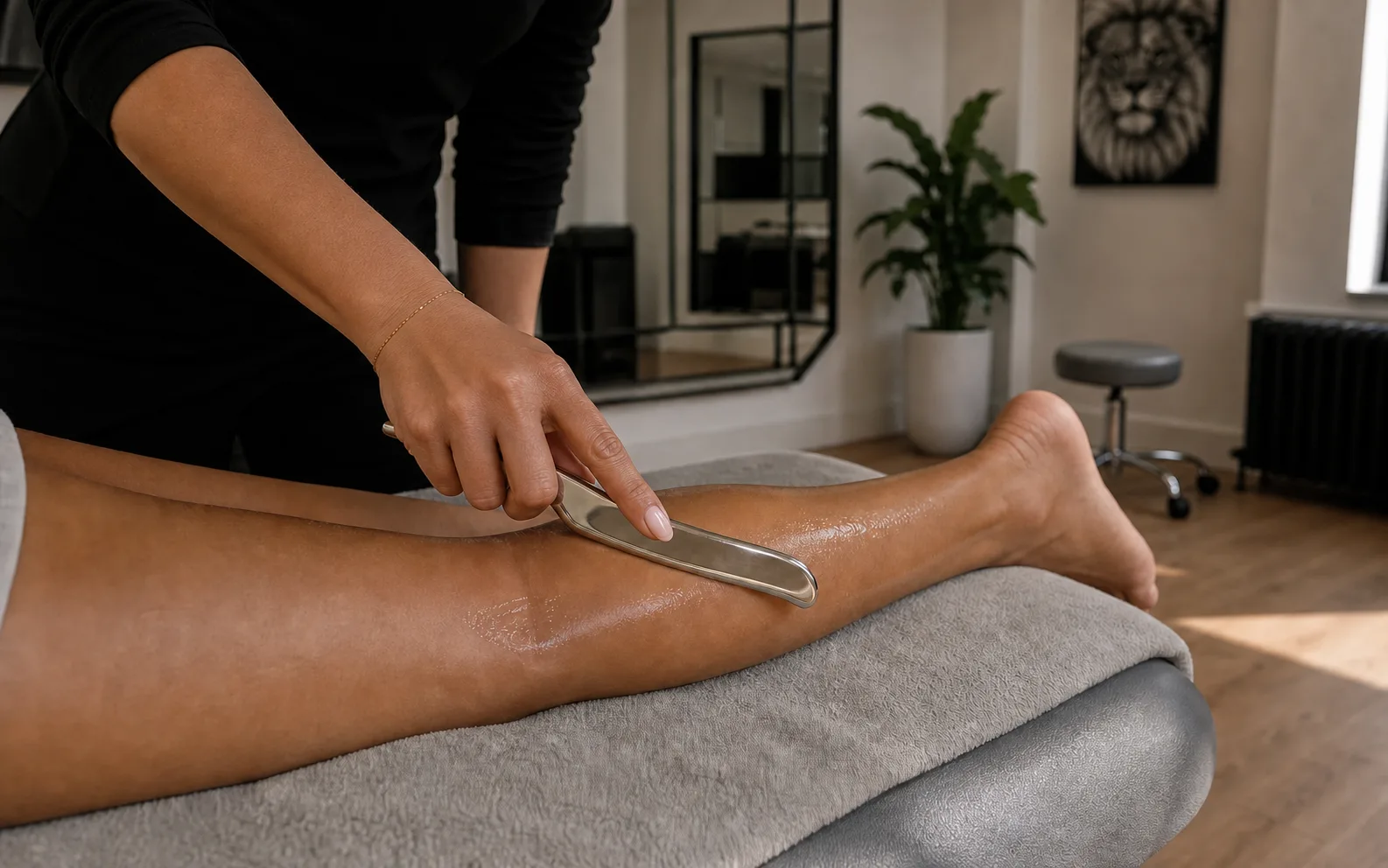
Graston Technique and instrument-assisted soft tissue mobilization (IASTM) use specially designed stainless-steel instruments to detect and treat areas of restriction in muscle, tendon, and fascia. The instruments let the provider feel adhesions and scar tissue the hands alone can miss, then work them with controlled pressure to restore glide and reduce pain.
At Sinar, IASTM is never used in isolation. Dr. Ashley pairs it with movement assessment, soft-tissue work, and rehabilitation so the change holds after the session — not just temporary relief on the table.
What you can expect
Commonly helps & benefits
Symptoms, lifestyle, medical history, orthopedic and neurologic testing, and functional movement patterns.
Chiropractic movement, soft tissue therapy, fascial work, taping, and rehabilitation guidance when appropriate.
A focused recommendation for visit rhythm, activity modification, and signals to monitor between appointments.
Related services

Chiropractic
A chiropractic first visit that mobilizes joints, muscles, and fascia with precise hands on work, movement assessment, and a clear plan.
Open service
Clinical Nutrition
A personalized deep dive into lifestyle, nutrition, fitness routine, and health history with recommendations that can be followed in real life.
Open service
Neurofunctional Acupuncture
Traditional Chinese Medicine with a Sinar twist, supported by ear seeding and cupping when appropriate to help patients restore balance.
Open serviceFrequently asked
Common questions about Graston Technique and instrument-assisted soft tissue work at Sinar.
Graston is a form of instrument-assisted soft tissue mobilization. A clinician uses a stainless steel instrument along the muscle and fascia to find and treat restricted tissue that is limiting motion or referring pain.
Some redness in the treated area is normal and expected as blood flow increases. Significant bruising is not the goal, and treatment pressure is adjusted to your tolerance.
It can feel intense over a restricted area, similar to a deep massage on a tight spot, and it eases as the tissue releases. Tell your provider what you are feeling, the pressure is adjustable.
It is typically used for soft-tissue restriction and scar tissue affecting movement, including chronic tightness, tendon-related pain and areas that have not responded to stretching alone.
Schedule directly with Sinar or call the office for timing and insurance questions.