
Neck stiff or achy by the end of a Midtown workday? The cause is often the day itself: the train ride, the laptop, the phone and the bag on your shoulder all add up. Chiropractic care and soft-tissue treatment may help ease that built-up tension and improve how your neck moves, especially when paired with small changes to your daily routine.
This post follows a hypothetical commuter through a typical day near Grand Central. She is not a real patient, just a composite of habits many Midtown workers will recognize. At each stop in her day, we will look at what her neck is doing and one small fix she can try.
7:45 a.m., the train
Our commuter boards a crowded train into Grand Central Terminal. There are no seats, so she stands, one hand on the pole, head tipped down toward her phone for the entire ride.
What the neck is doing: the head is heavy, and when it tips forward, the muscles at the back of the neck and across the tops of the shoulders work harder to hold it up. Forty minutes of that, twice a day, five days a week, can leave those muscles tired and guarded before the workday even begins.
Small fix: hold the phone up closer to eye level, even if it feels awkward at first. If she gets a seat, she can rest her head back against the headrest and let the seat carry some of the load. On days she reads, a book held at chest height beats a phone held in her lap.
10:30 a.m., the laptop
She is at her desk a few blocks from Grand Central, working on a laptop flat on the desk. The screen sits low, so her chin drifts toward her chest. She has been in this position for over an hour without moving.
What the neck is doing: it is not only the forward bend. It is the stillness. Neck muscles are built to move, and holding one position for a long stretch can leave them stiff and sore. The joints of the neck also tend to stiffen when they stay in one range for hours.
Small fix: raise the laptop on a stack of books or a stand so the top of the screen is closer to eye level, and use a separate keyboard if possible. Set a quiet reminder to stand up or roll the shoulders every 30 to 45 minutes. Even a slow look up at the ceiling and a few gentle turns of the head can interrupt the stillness.
1:00 p.m., the phone at lunch
Lunch is a sandwich on a bench near Bryant Park, eaten one-handed while she scrolls with the other. Then a call with a friend, phone pinched between her ear and shoulder so she can type at the same time.
What the neck is doing: cradling a phone against the shoulder tilts the head to one side and holds it there, which can strain the muscles along that side of the neck. Scrolling adds another long stretch of looking down. Lunch was supposed to be a break, but for her neck it is more of the same.
Small fix: use earbuds or speakerphone for calls instead of the shoulder pinch. Eat first, scroll second. A short walk around the block, head up, gives the neck a chance to move through a fuller range after a morning of looking down.
3:30 p.m., the afternoon slump
Back at her desk, the day is catching up with her. Her shoulders creep toward her ears, her chin pushes forward, and she notices a dull ache at the base of her skull. She rubs the spot where her neck meets her shoulder without thinking about it.
What the neck is doing: fatigue often shows up as tension. The muscles between the shoulder blades and along the sides of the neck tighten, and some people notice the ache travel upward toward the head or outward toward the shoulder. This is a common pattern for desk workers, though it can have many causes.
Small fix: a few slow shoulder rolls, gently drawing the chin back so the ears stack over the shoulders, and a minute of deep breathing can ease some of the tension. If the ache keeps returning every afternoon, that pattern is worth paying attention to.
6:15 p.m., the gym bag
Work is done. She slings a heavy bag over one shoulder, hurries back through Grand Central, and squeezes in a workout before the train home. The bag stays on the same shoulder the whole way.
What the neck is doing: a one-sided load makes the neck and shoulder muscles on that side grip to keep the bag from sliding. Over time, that uneven load can feed the same tension that started on the morning train. A hard workout on already tired neck and shoulder muscles can add to the soreness.
Small fix: switch shoulders regularly, lighten the bag, or use a backpack with two straps so the load spreads evenly. A few gentle neck stretches before and after exercise can help the muscles warm up and settle down.
11:00 p.m., the pillow
She falls asleep on her stomach with her head turned sharply to one side on a tall pillow. Her neck spends the night rotated, and she wakes up stiffer than when she went to bed.
What the neck is doing: sleep is when the body should recover, but a pillow that pushes the head too far up, down or sideways can keep the neck in a strained position for hours. Morning stiffness is often a clue that the pillow or sleep position is part of the problem.
Small fix: back or side sleeping with a pillow that keeps the head level with the spine is often easier on the neck. If she wakes up stiff most mornings, changing the pillow is a reasonable first experiment.
When to book care, and what a visit may include
Self-care helps many people, but some patterns are worth getting checked. Consider booking a visit if neck pain or stiffness keeps coming back, lasts more than a couple of weeks, limits how far you can turn your head, or comes with symptoms like arm pain, tingling or frequent headaches. Sudden severe pain, weakness in an arm, or neck pain after a fall or collision should be checked by a medical provider right away.
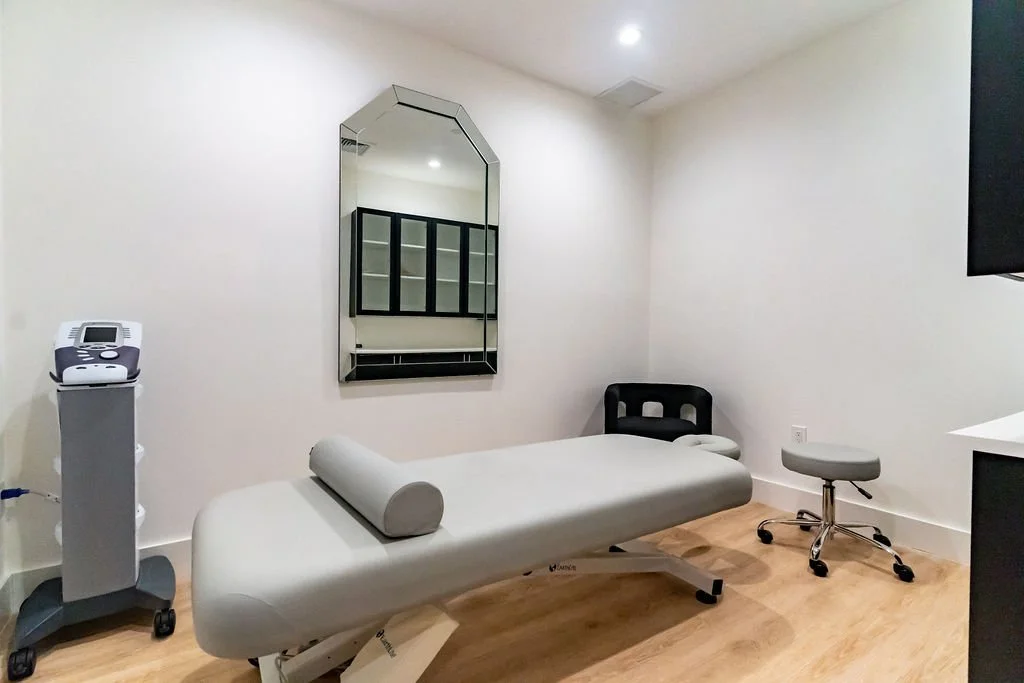
At a first visit, a chiropractor will typically ask about your symptoms, your work setup and your daily habits, then examine how your neck and upper back move. Care may include gentle adjustments to improve joint motion, soft-tissue work to ease tight muscles, and guidance on posture, stretches and desk habits. Some people notice improvement quickly, while others benefit from a short series of visits. Results vary from person to person, and your provider can talk with you about what to expect. You can read more about the chiropractic, soft-tissue and wellness services offered at Sinar Treatments on our services page.
The goal is not just a quieter neck for one afternoon. It is helping your neck handle the commute, the laptop and the phone with less strain, day after day.
If commuter neck sounds familiar, Sinar Treatments is at 389 Fifth Avenue, Suite 302, near Bryant Park and Grand Central. Call us at (212) 417-0199 to talk with our team or book online, and the team can map out a plan that fits your workday.